

Internship Project
2024
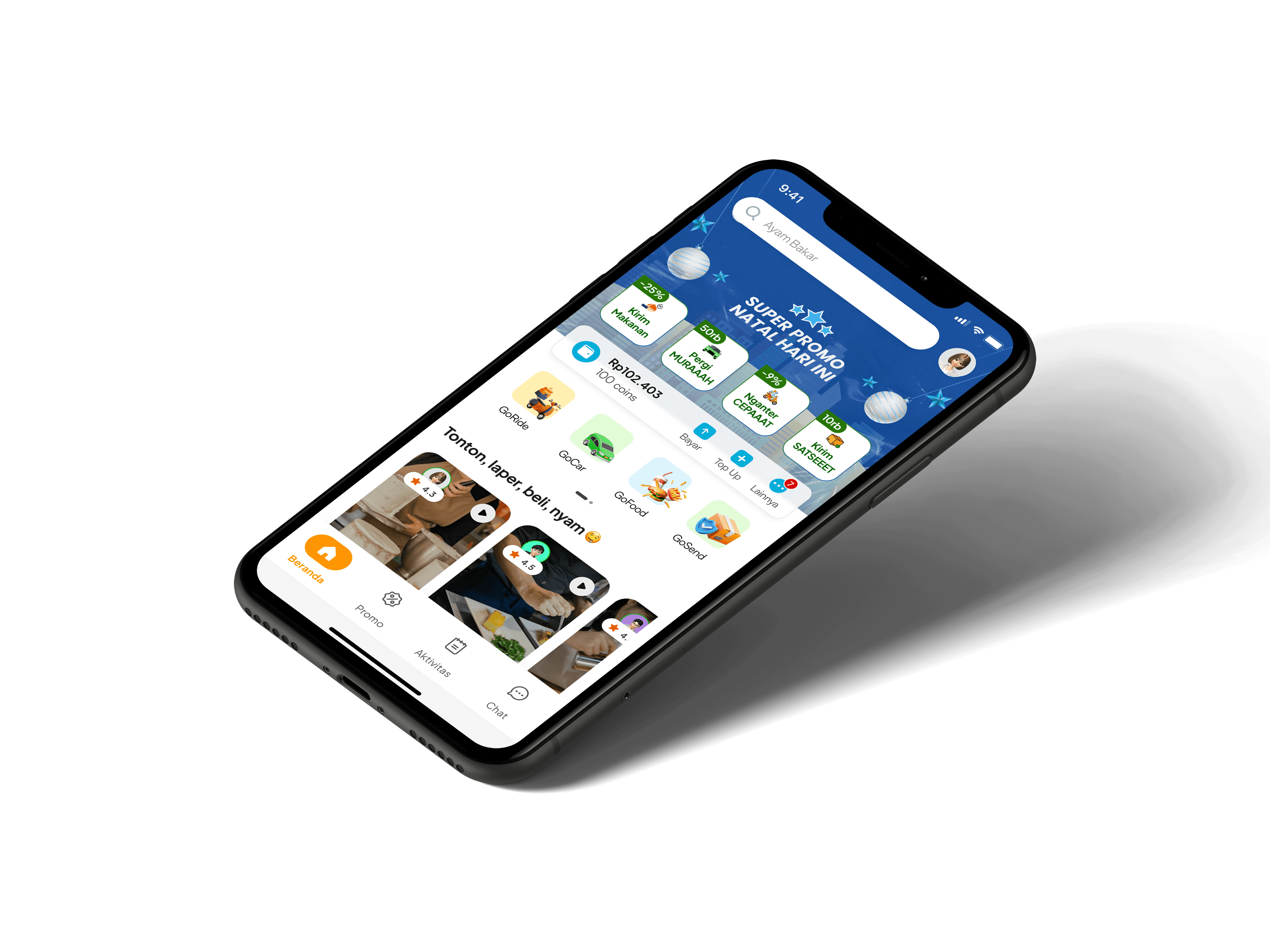
This redesign project reimagines the Gojek app experience to simplify navigation. Through iterative wireframing and prototyping, I developed a cleaner, scalable interface that improves daily task efficiency while preserving Gojek’s strong brand identity.
Solo Project
Daffa Nazhiiff Muttahar
UI/UX Designer
Duration
2 Months
2 Jul - 13 Sep 2024
Tools
Figma
Miro
Problem
As Gojek evolved into a full super app, the home interface became increasingly crowded with services, promotions, and secondary actions.
This density created three core problems for everyday users:

The homepage feels too crowded
Too many banners and promotional sections appear at once, making it hard for users to focus.

Product information isn’t easy to scan
Important details like price, variants, and specifications are not clearly structured, which slows users down.

The checkout flow feels confusing
Users need to go back and forth to review shipping costs, discounts, and payment details, making the process feel less smooth.
Solution
To address these issues, the redesign intentionally reduces choice at the top level and defers secondary services, allowing the interface to optimize for speed, clarity, and habitual usage.
Key Decisions Reflected in the Final UI
More focused homepage
The layout is simplified by reducing visual clutter and highlighting the most important features.
Clearer information structure
Product details are reorganized so users can quickly scan key information like price and variants without extra effort.
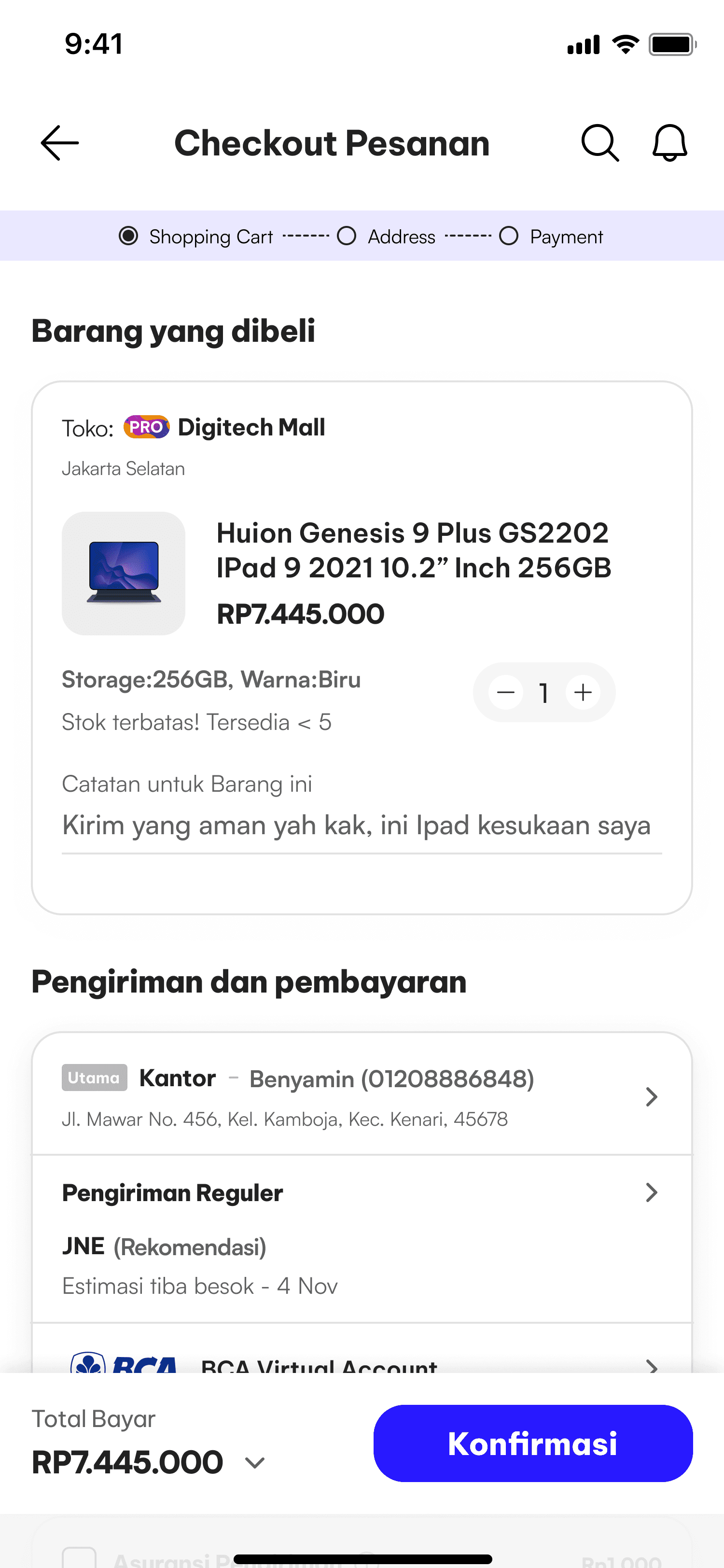
Straight through transaction flow
The payment flow is redesigned to be more linear and transparent, so users can clearly see the total cost
Design Process
Auditing Current App
To gain deeper insights into Gojek’s existing experience, I conducted a comprehensive audit assessing its navigation flow, interface clarity, and overall usability.
Navigation Bar

Quick Access Menu

Today’s Deals

Browse Categories

Price Overview

Popular Products

Analyzing Similiar Apps
I analyzed several comparable services to identify best practices and innovative features that could be incorporated into my redesign.
Navigation Bar

Quick Access Menu

Today’s Deals

Browse Categories

Price Overview

Popular Products

Ideation
Based on the ideation process, I restructured the navigation to make core services easier to access and reduce visual complexity. The following sitemap comparison shows how the original structure was simplified into a more focused and task oriented layout.
Updated Website SiteMap

Wireframing
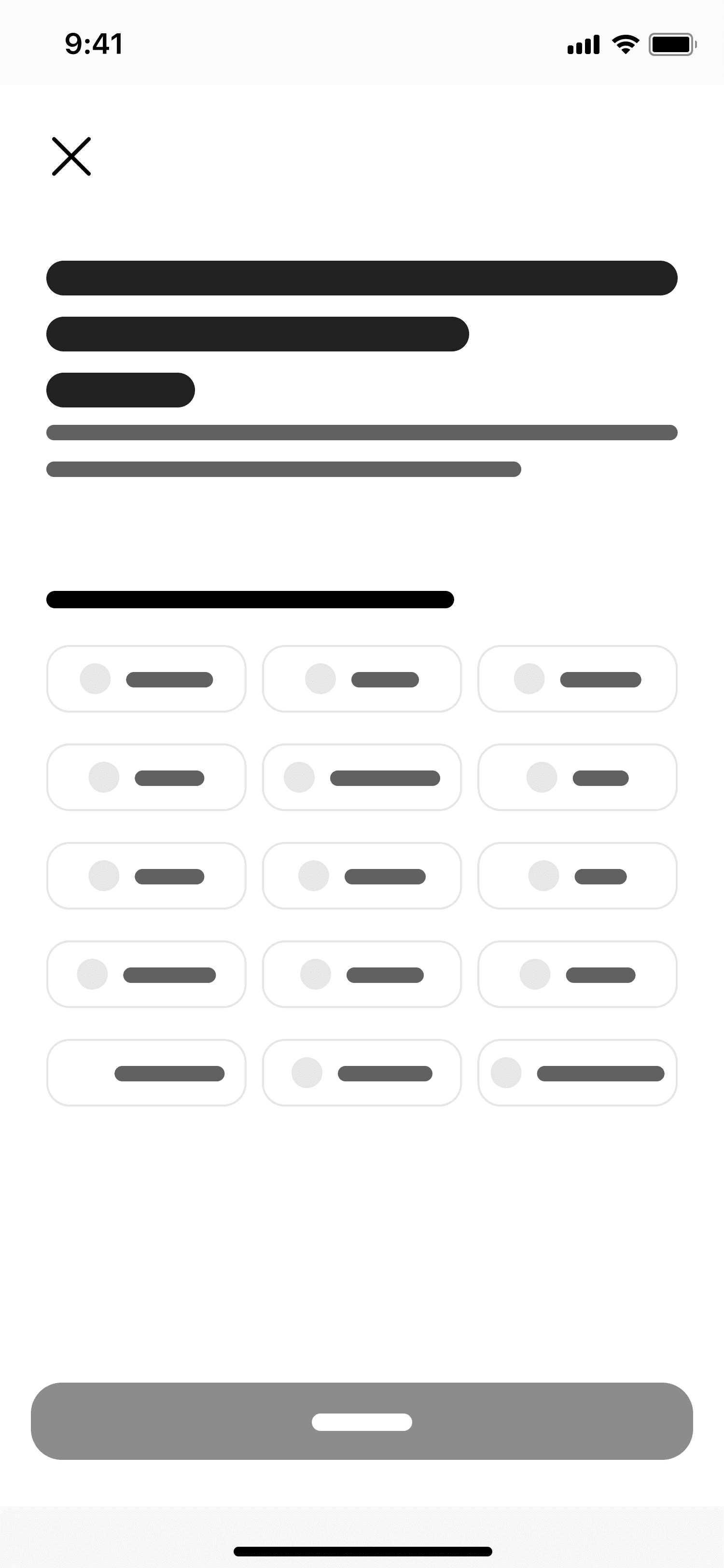
I translated the core problems into low fidelity layouts, focusing on simplifying the home structure, prioritizing the four primary services, and creating a more direct transaction flow before moving into visual design.




Prototyping
Since the overall layout and structure were already clear, I moved into flow prototyping. This allowed me to quickly test how the main services were prioritized, how the navigation felt, and whether the transaction flow was easy to follow.
High Fidelity Mockups
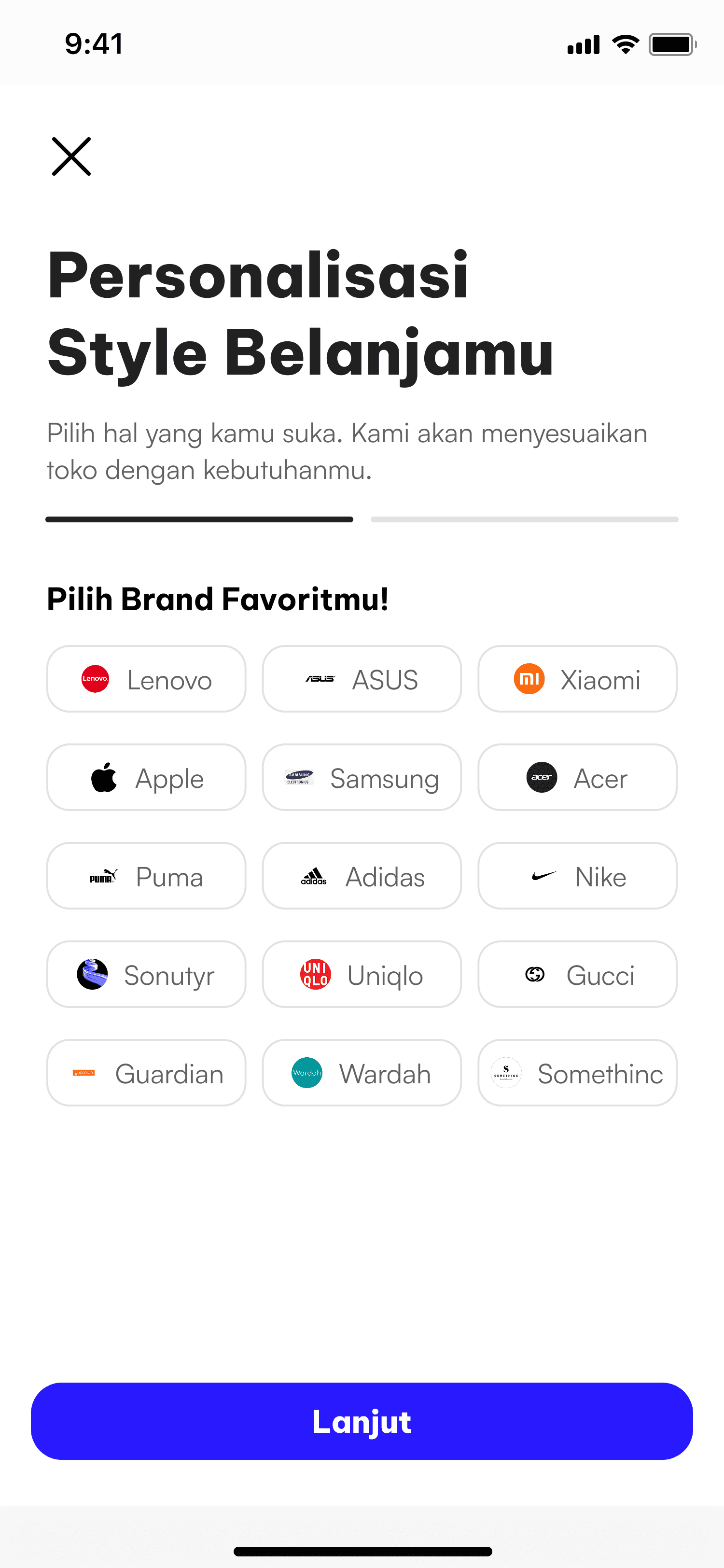
At this stage, I refined the typography, spacing, and component behavior across the key screens. The focus was on creating a simpler home experience, highlighting the most frequently used services, and building a consistent visual system.






User Testing
To validate the redesign, I conducted usability tests with a small group of users. The sessions focused on how easily they could access the main services, understand promotions, and complete transactions. The feedback helped refine the navigation, improve clarity on the home screen, and simplify the overall flow.
Design Systems
Color Palette
Used a warm orange as the primary color to reflect energy, approachability, and everyday mobility. Supporting yellow accents enhance highlights and promotions, while blue tones provide balance and clarity for functional elements across the interface.
Primary

Accent

Accent

Neutral

Typography
Plus Jakarta Sans

Satoshi
Conclusion
The redesigned Gojek interface focuses on clarity, speed, and everyday usability. By prioritizing the most used services, simplifying the layout, and reducing visual noise, the experience becomes more direct and easier to navigate. These improvements help users complete tasks faster while maintaining consistency across the interface.
Reflection
Real Usage Drives Structure
Prioritizing the most frequently used services helped reduce decision time and made the home screen more intuitive.
Simplicity Improves Speed
Cleaner layouts and fewer visual distractions allowed users to move through tasks with less friction.